Hair Today, Longer Tomorrow: A Detroit Guide to Extensions That Keep It Real
Let's talk about the fantasy: waist-length hair by Friday, no questions asked. Now let's talk about the reality: bonds, maintenance, heat limits, and the moment you realize your $79 online set is three shades off from your salon color. Extensions can be glorious. They can also be a cautionary tale with a ponytail.
At Curl Up & Dye Detroit, we're pro-extension and pro-truth. Whether you're chasing volume for a Woodward Avenue night out or length that survives a Michigan winter, the goal is simple: no mystery installs, no color clashes, and no surprises when it's time to take them out. Here's the honest field guide.
First, Match the Method to Your Actual Life
Extensions are not one product. They're a family of products with different commitment levels, price points, and personalities.
Clip-ins are the commitment-phobes of the group. You can put them in for a dinner in Corktown and take them out before bed. A decent human-hair set typically runs $100 to $500, and installation is DIY or a quick salon assist. The catch? Clips can feel bulky, and if your natural hair is fine, the blend has to be thoughtful. They're great for occasional length and volume—not for a week at the lake.
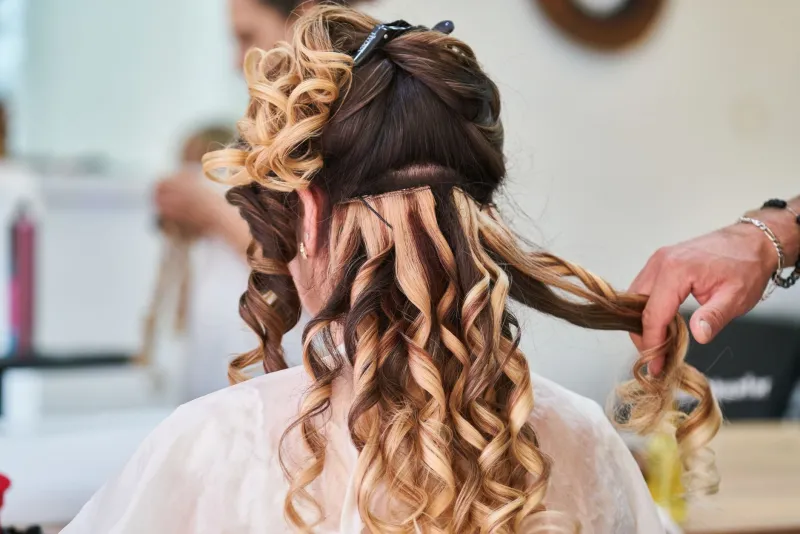
Tape-ins sit flat and feel lightweight, which makes them a favorite for everyday volume. Expect $200 to $600 for hair, plus installation that often lands in the $100 to $300 range depending on your stylist and density. They're re-taped or moved up every four to eight weeks. Tape-ins are not ideal for oily scalps or people who love a heavy dose of leave-in conditioner at the roots. The adhesive is doing important work; respect the bond.
Sew-ins are the long-game option. A traditional sew-in or a braided foundation can run $400 to $1,200 all-in, depending on hair quality, braiding time, and the stylist's rate. They can last six to eight weeks with proper care, then need a tighten or reinstall. They're excellent for protective styling and serious length, but they are not a lunch-break appointment. If someone promises a full sew-in in 45 minutes, ask what else they're promising.
The Cost Is the Hair, the Install, and the Aftercare
A common extension mistake is budgeting for the hair and forgetting the rest. The real number includes the hair itself, the install, the removal, the maintenance appointments, and the products you'll need to keep the bonds and your natural strands happy.
A realistic annual extension budget depends on how often you wear them. A clip-in loyalist might spend a few hundred dollars once and call it a year. A tape-in regular might spend $600 to $1,200 over several months once installs, moves, and aftercare are included. A sew-in client should plan for regular salon visits and a proper takedown, not a desperate detangling session at 11 p.m. with a comb and a prayer.
Ask your stylist for the full estimate before the first bond is placed. A good salon will break it down without acting like you asked for their social security number.
Maintenance Is Not a Suggestion
Extensions are like houseguests: lovely when everyone follows the rules, chaotic when they don't.
Clip-ins need to be washed, conditioned, and stored carefully. Tape-ins need gentle brushing, sulfate-free care, and regular moves so the bonds don't slide or clump. Sew-ins need scalp care, careful cleansing, and a stylist who checks tension and takes them down properly. Sleeping on wet extensions, yanking a brush through a bond, or treating your install like a regular blowout is how you end up with tangles and regret.
In Detroit, winter adds another wrinkle: dry air, hats, and static. Keep moisture in your routine, protect your ends at night, and don't skip the leave-in just because your hair is technically "not yours." It is yours now. Act accordingly.
Heat Styling: Know Your Limits
Human-hair extensions can usually take heat styling, but the bond area is the boss. Tape-in bonds and keratin bonds do not want a 450-degree flat iron pressed against them. Clip-ins can be styled, but use lower heat and a heat protectant, especially on synthetic blends. If your extensions are synthetic, assume no hot tools unless the manufacturer explicitly says otherwise.
A good rule: style the extension hair, not the attachment point. Keep heat moving, use protection, and don't cook the bonds like you're searing a steak. Your stylist can tell you exactly what your specific set can handle.
Extensions and Salon Color Work Need a Shared Calendar
This is where mismatches happen. If you're planning both color and extensions, decide the order with your stylist. Often, it's smart to color your natural hair first, then match the extensions. Or, if you're buying human hair, you may be able to have the extensions custom-colored to blend with your salon color. What you should not do is lighten your natural hair three levels and assume the extensions will magically follow.
Also: never bleach tape-in bonds or the attachment area. That's not a color appointment; that's a science experiment with a bad ending. A proper consultation should include a strand test, a lighting check, and an honest conversation about how your color will look in daylight, salon light, and the fluorescent glow of a Detroit parking garage.
Red Flags of a Bad Application
A few warning signs are worth taking seriously:
- No consultation, no questions, no discussion of your hair density or routine.
- Pressure to go longer or heavier than your natural hair can support.
- Visible bonds, bulky rows, or a hairline that looks like a curtain rod.
- Painful tension at the scalp. Discomfort is not a personality trait.
- No aftercare instructions, or vague advice like "just don't wash it."
- A color match done under one light with no strand test.
- A stylist who can't explain removal. If they can't get them out safely, they shouldn't put them in.
The Bottom Line
Extensions are a tool, not a personality. The right set should match your color, your density, your budget, and your actual willingness to maintain them. The wrong set will announce itself in every photo and every mirror.
If you're considering length or volume in 2026, book a consultation at Curl Up & Dye Detroit and bring your real routine—including your gym schedule, your hat habit, and your honest relationship with heat styling. We'll help you find an extension plan that looks natural, feels comfortable, and doesn't require a secret second life to maintain. Hair today, longer tomorrow—just keep it real.